A Library That Fits in a Free Little Library
A zine catalog, a printing guide, and an events page, built from a pile of draft copy in about two weeks.
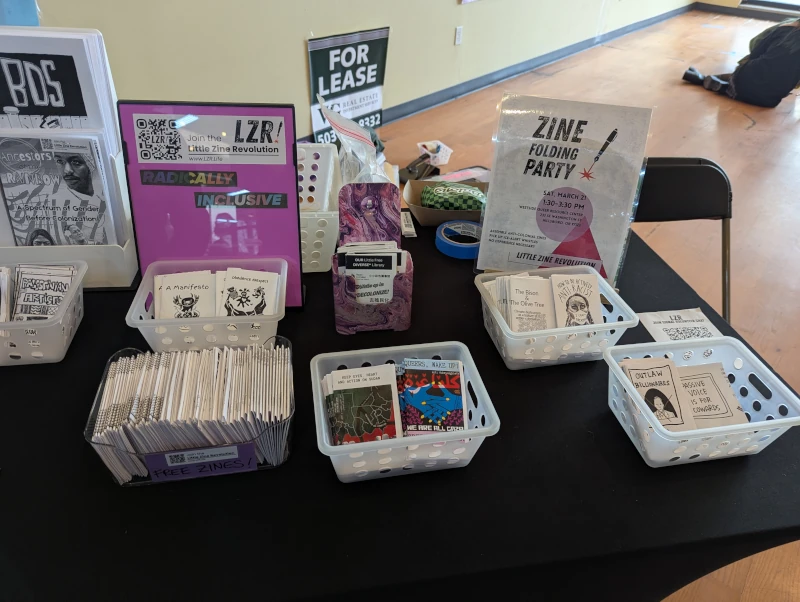
A colleague I'd met volunteering at Positive Charge PDX got in touch about a project. She runs a little free library and distributes zines around Portland, and she wanted a place where anyone could find them, print them, and put them out in their own neighborhood.
What she had was a document full of copy and a clear sense of the thing. What she needed was a website.
Starting with the look, not the code
We started with a mood board. I pitched sketchy Japanese print against a muted Bauhaus palette, which sounds like an odd pairing until you see zines next to it: hand-made texture, hard structure underneath. She had the taste and I had the tools, so settling the look first meant the rest of the build never got stuck arguing about it. The logo came out of the same pass, which is why the site and the mark look like they were made by the same hand.
Then she handed me her draft copy and I started building.
One pass, then a real conversation
Four or five days later we got on a video call and went through what I had. That call was the actual design work. Her copy was written as one long piece, and on screen it was obvious it wanted to be several pages: a catalog, a how-to guide for printing and folding and distributing, events, a gallery of zines out in the wild.
We took notes on how the pages should point at each other, since somebody who lands on a single zine needs an obvious path to "here's how you print this." A few days of back and forth by text, then a second call: demo, live edits while she watched, and out the door for a soft launch.
That call turned one page into four. The how-to instructions living on the homepage became their own step-by-step guide, with just the basic steps staying behind on the front page so a first-time visitor still sees what to do. We added a page for photos from events and from the community, so the work shows up as people doing it rather than as a description of it. And somewhere in that conversation the community kit appeared: a page of design guidelines and downloadable branding, so anyone starting their own little zine revolution can make it look like part of the same thing without asking permission.
None of that was in the original copy. It came out of looking at a real page together and asking what was missing.
What it does
The part that mattered most isn't visible from the front page: her whole team runs the site themselves.
I walked them through creating GitHub accounts, and they each log into a CMS that edits the site directly. Adding a zine means filling out a form: the PDF, a cover photo for the catalog preview, tags, and which folding method it uses. Those last two aren't decoration. They drive the filters in the catalog, so someone hunting for a single-sheet fold they can print on a lunch break finds it in two clicks instead of opening twelve PDFs.
Events work the same way. They add one, it appears on the upcoming events page in date order, and the page generates iCal and Google Calendar links automatically. There's also a subscribe link that adds the whole calendar at once, so every event they post from then on lands in your phone without you ever visiting the site again. A visitor taps once and the folding parties show up on their own, which is the difference between meaning to go and going. The feed is a plain file rebuilt whenever they publish, so there's no server sitting there waiting to answer calendar requests.
There's no login for visitors either. The site is static, the zines download straight to your printer, and the people who made it can change it without calling me.
We are a tiny team with big dreams of making zines more accessible for everyone. Adam showed sincere interest in our project, listened to our ramblings, asked great questions, and helped us build a website beyond what we'd hoped for. He was extremely creative, organized, and responsive throughout the process, which made him a great collaborator.
— Wendy Shih, Little Zine Revolution
Need a site that does one job well?
If you've got the words and none of the time, that's the version of this work I do most often.
Book a call